Call: +1 212-972-1212 Open Hours: Mon-Friday 9:00 am-6:00 pm
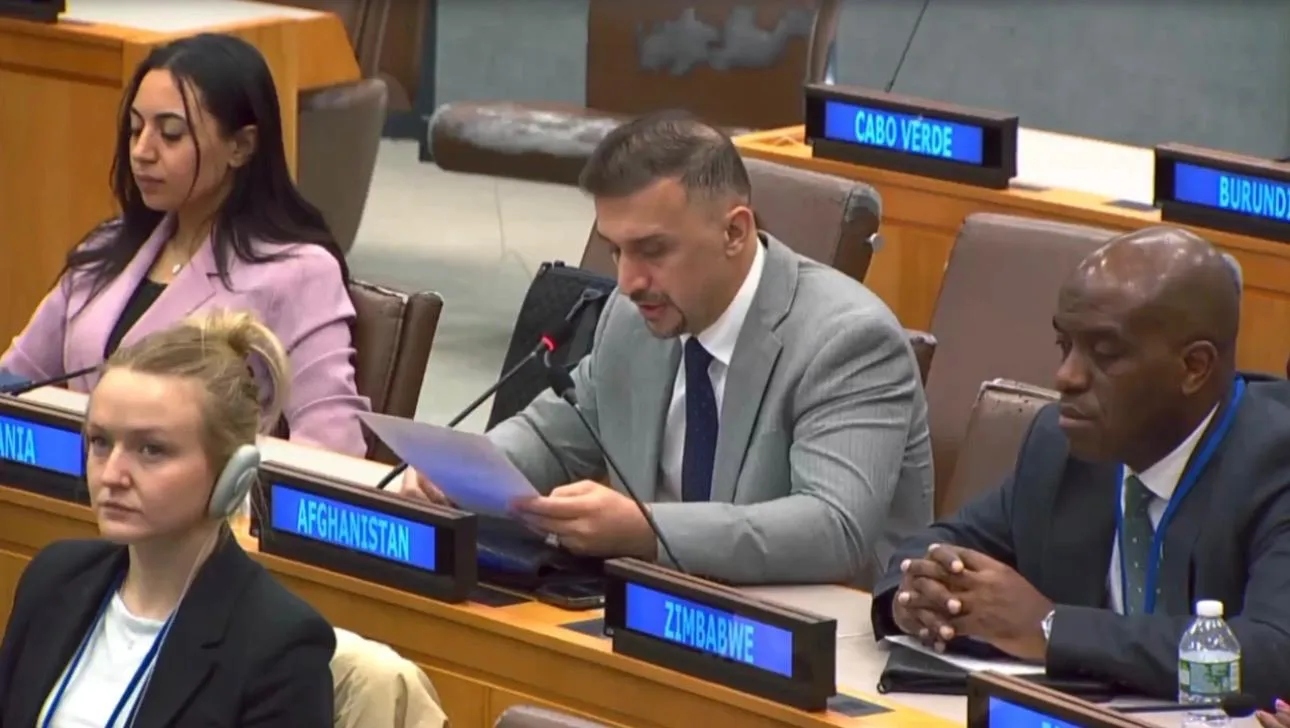
Afghanistan’s Statement on Freedom of Religion or Belief at the UNGA81 Third Committee
October 23, 2026
Mr. Naseer Ahmad Faiq highlighted growing restrictions on freedom of religion or belief in Afghanistan, discrimination against religious and ethnic minorities, and the...
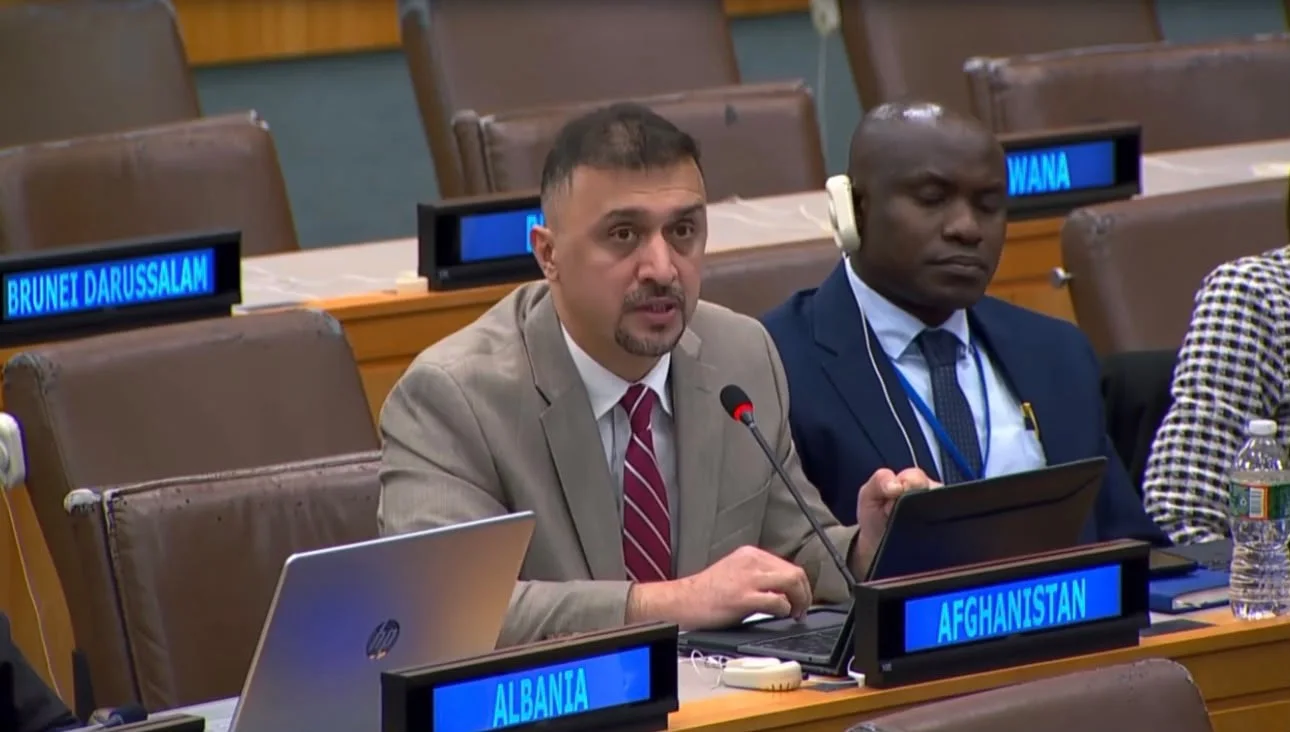
Afghanistan’s Statement at the Third Committee of the UN General Assembly on Cultural Rights
October 21, 2026
Afghanistan condemned the Taliban’s discriminatory policies and systematic restrictions on cultural expression, including bans on music and traditional celebrations, women’s exclusion and restrictions...
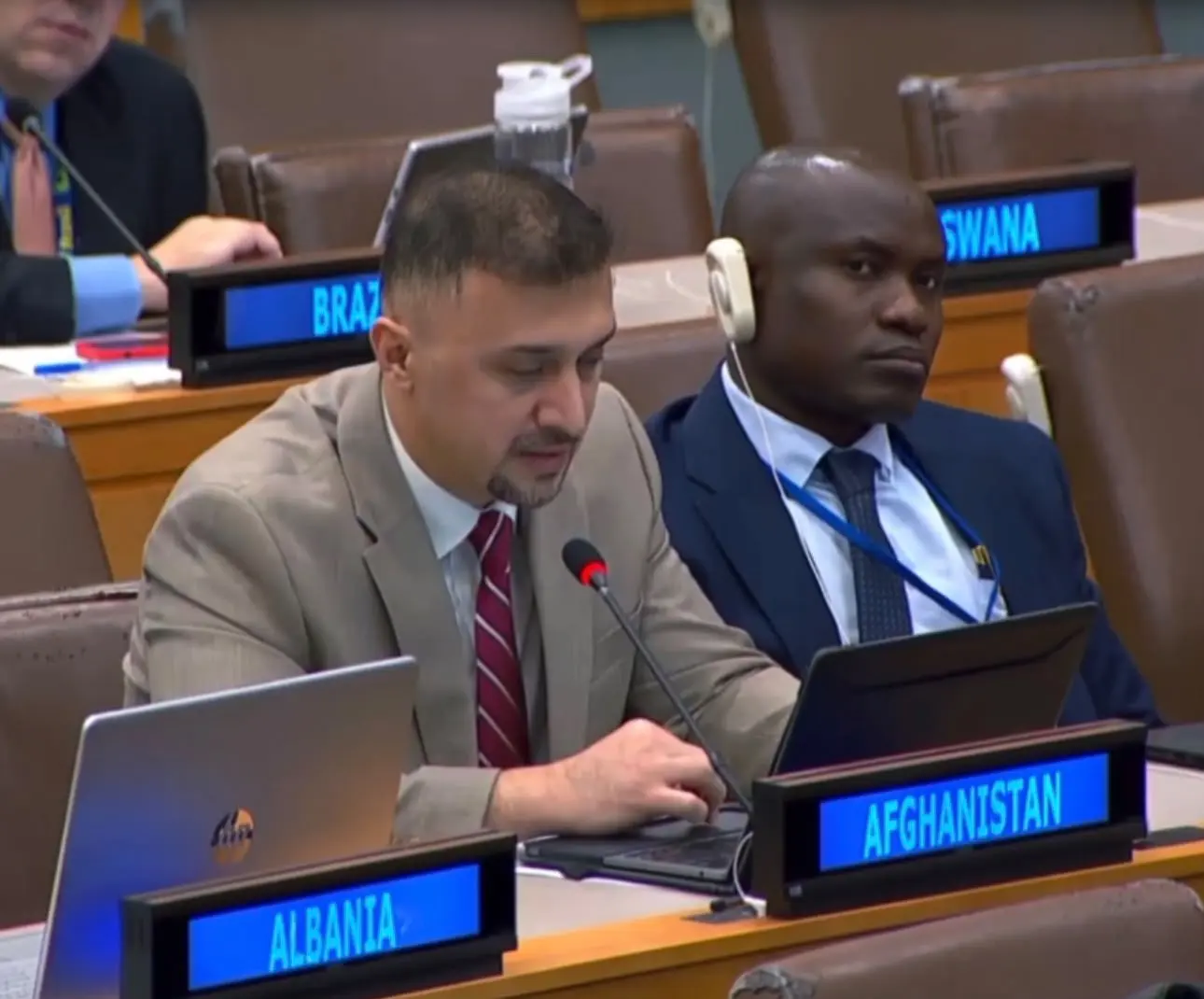
Afghanistan’s Statement at the Third Committee of the UN General Assembly on Human Rights Defenders
October 20, 2026
Afghanistan highlighted the Taliban’s abuses against human rights defenders, particularly women, and called for independent investigations, accountability and urgent protection. The statement urged...
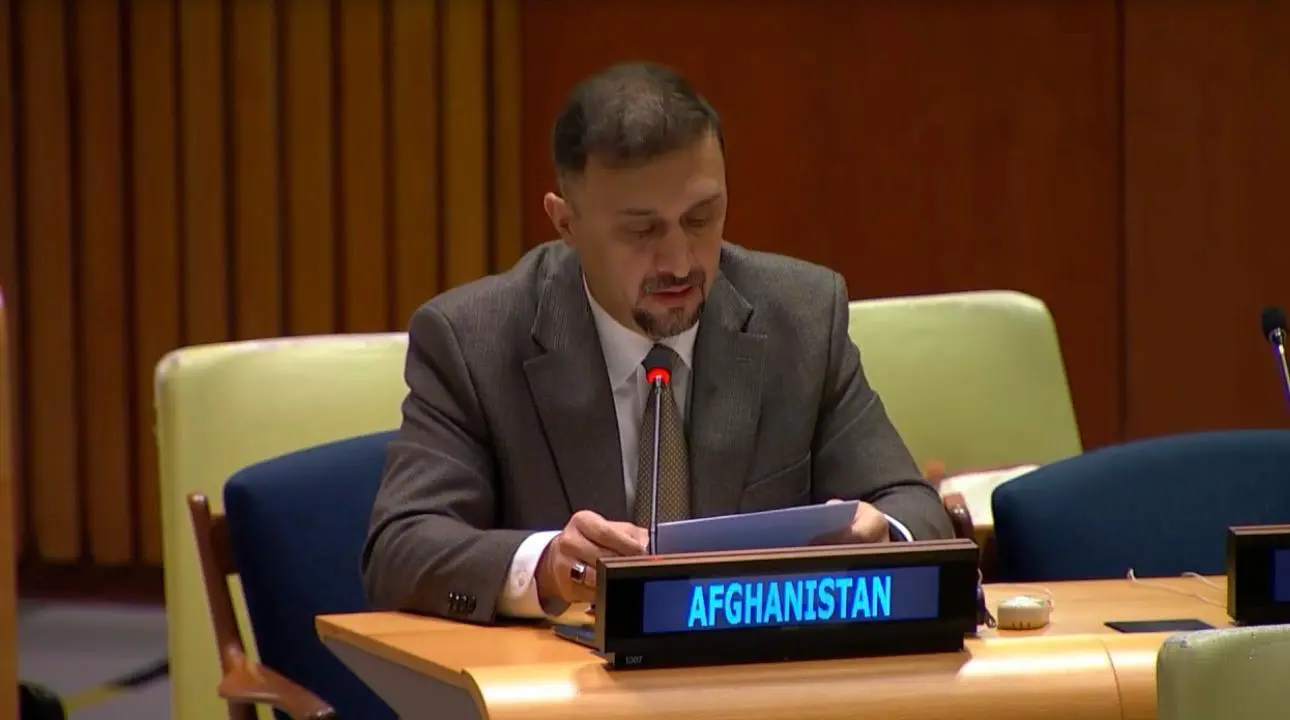
Afghanistan’s Statement at the UN General Assembly Sixth Committee on the Rule of Law at the National and International Levels
October 8, 2026
Ambassador Naseer Ahmad Faiq highlighted the Taliban’s dismantling of legal and judicial safeguards and called for legitimate, accountable governance through an Afghan-led political...
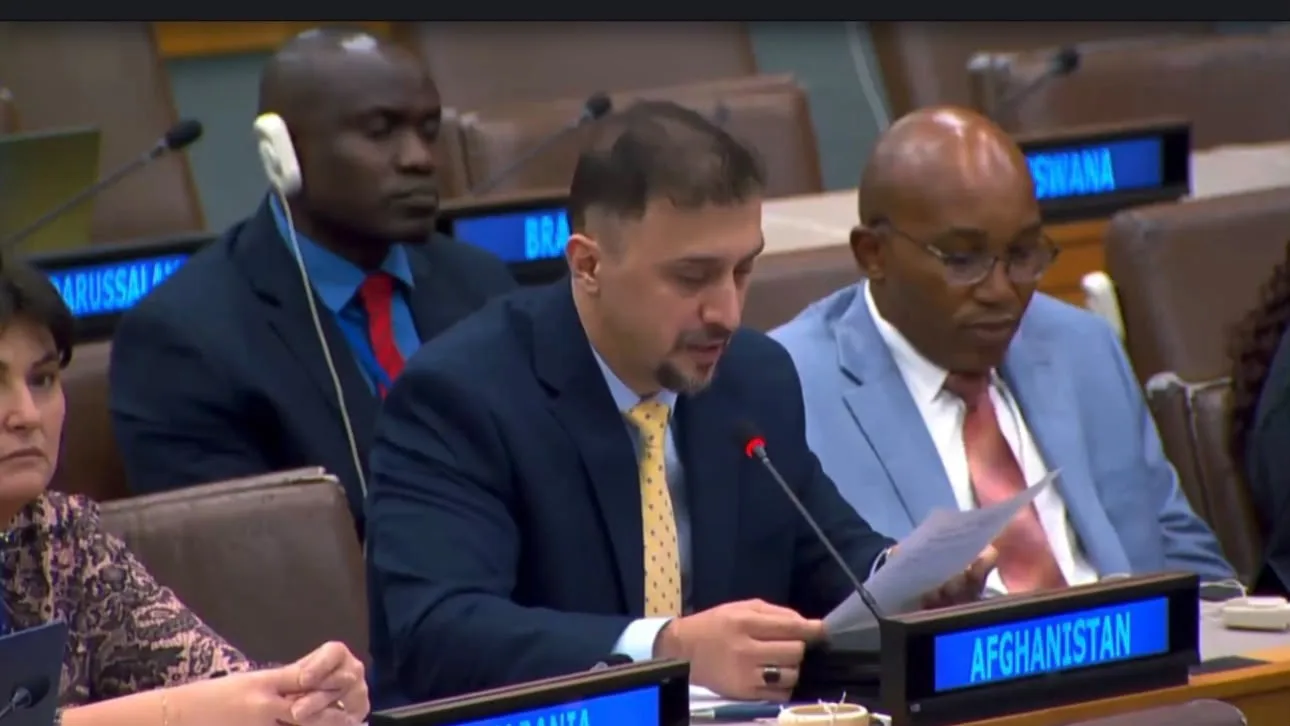
Statement by H.E. Mr. Naseer Ahmad Faiq on the Promotion and Protection of Human Rights
October 8, 2026
Ambassador Faiq condemned the Taliban’s institutionalised discrimination and repression and called for concrete international action to protect the rights of all Afghans. He...
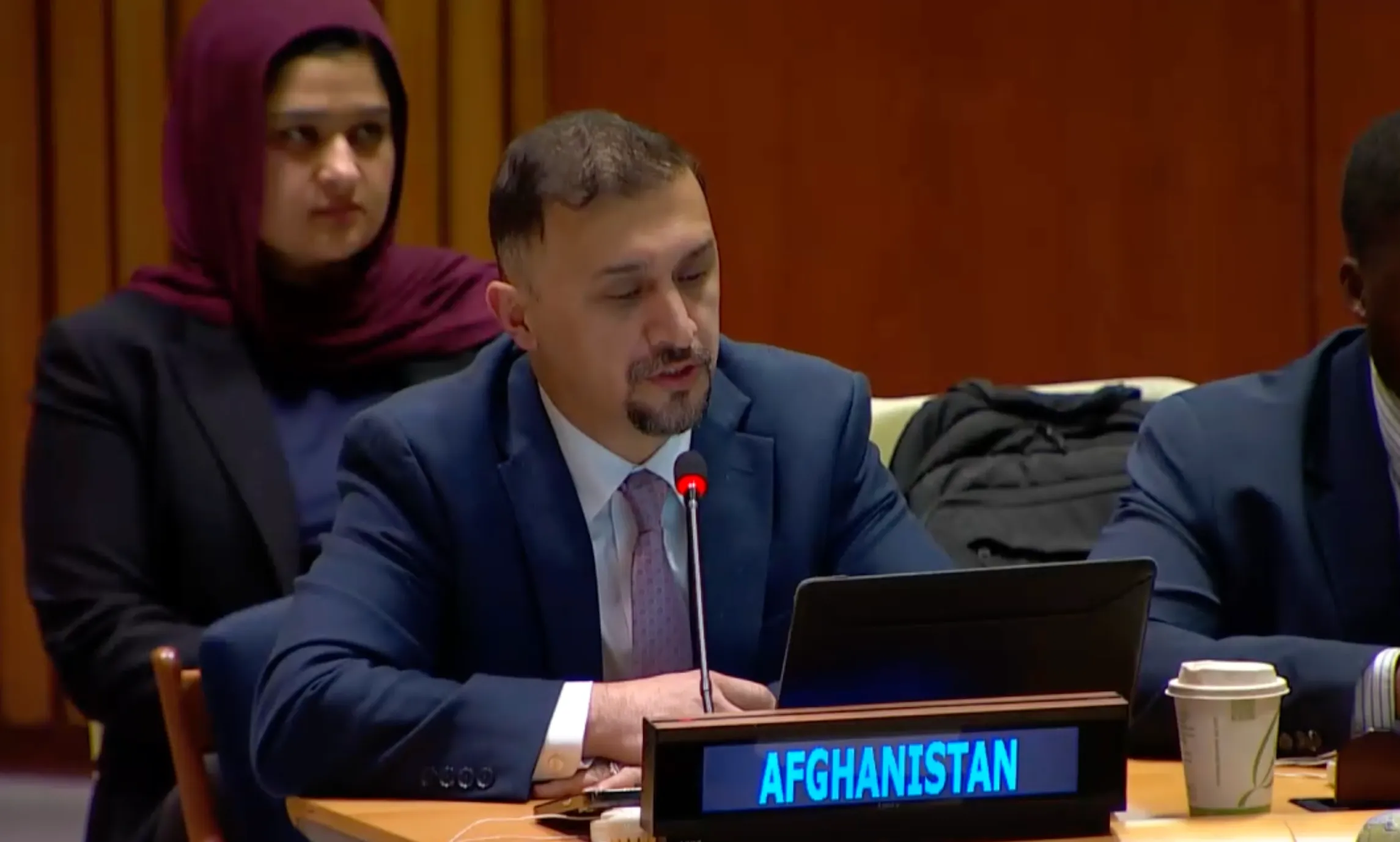
Afghanistan’s Statement on International Terrorism-Sixth Committee
October 6, 2026
Afghanistan condemns terrorism in all its forms and calls for a coordinated international response grounded in civilian protection, accountability and inclusive governance, while...
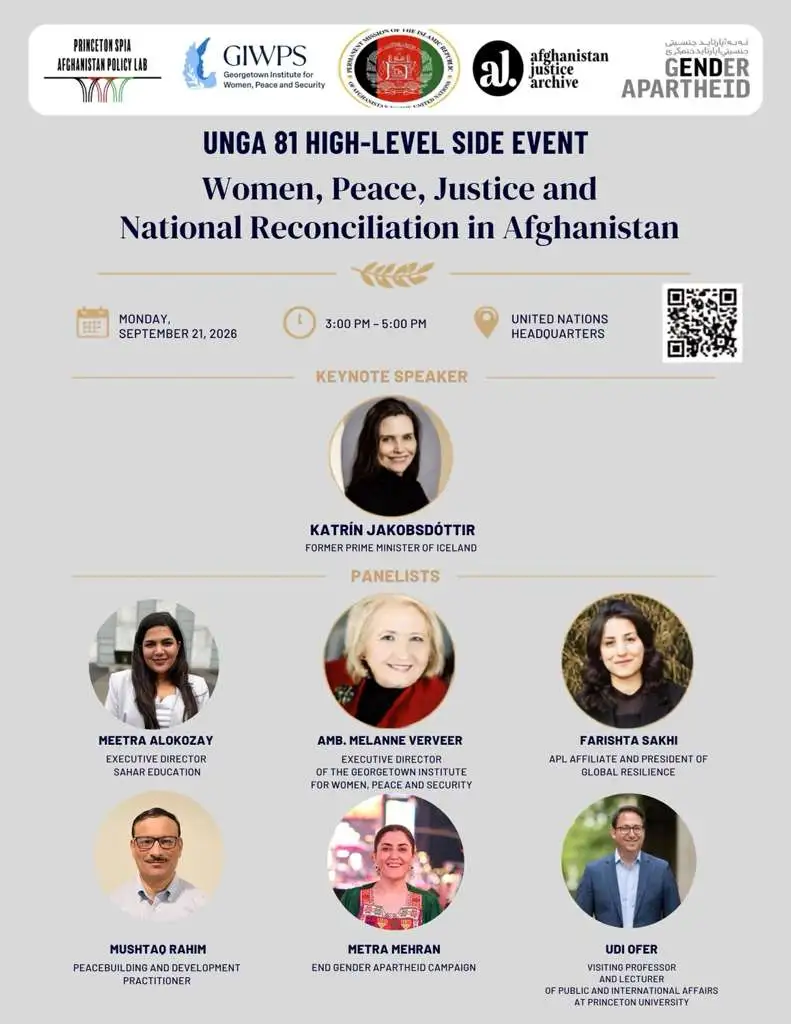
Opening Remarks at the UNGA 81 High-Level Side Event on Women, Peace, Justice and National Reconciliation in Afghanistan
September 22, 2026
In his opening remarks at the UNGA 81 High-Level Side Event on “Women, Peace, Justice and National Reconciliation in Afghanistan,” Chargé d’Affaires Naseer...
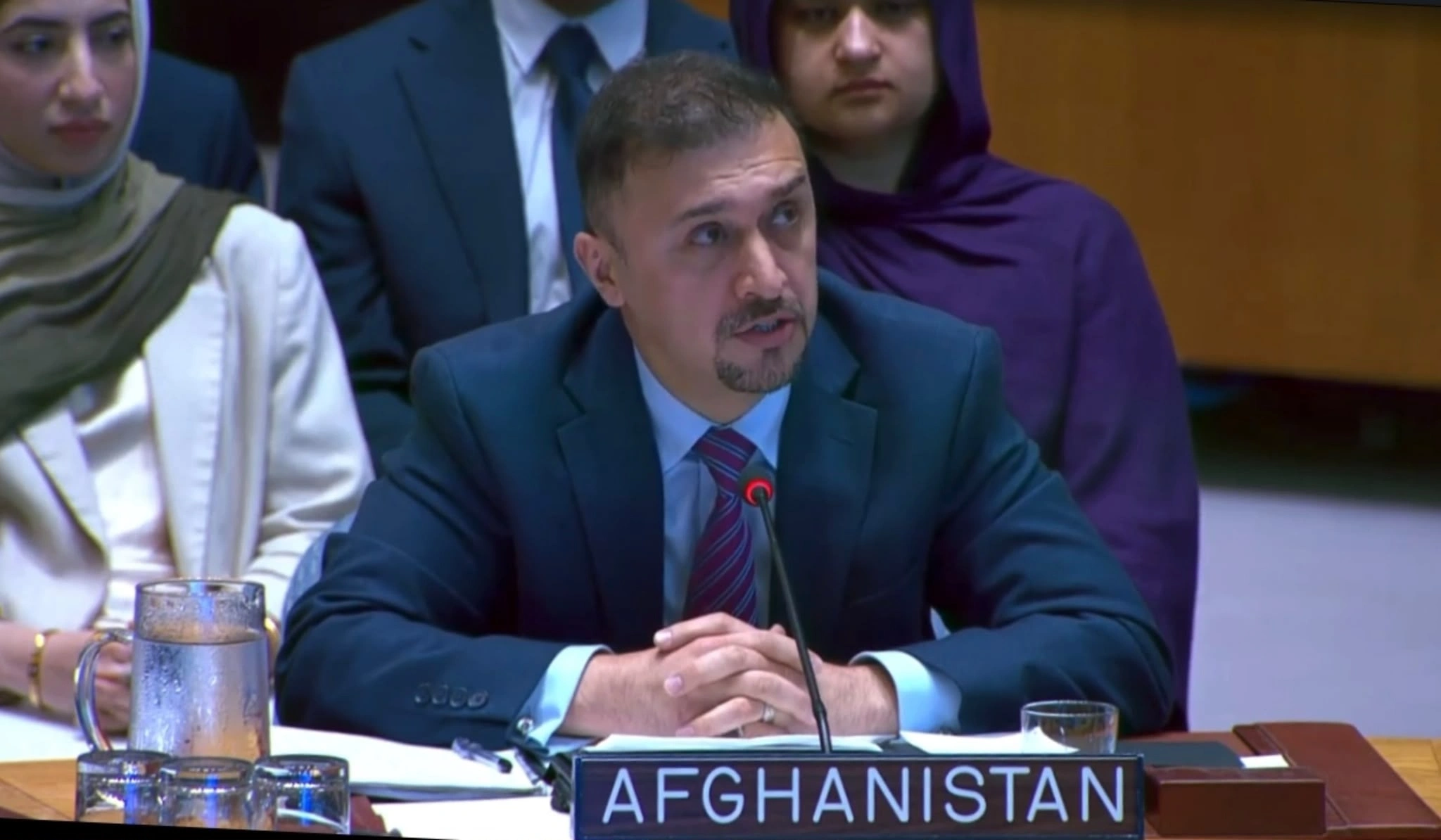
Statement by H.E. Naseer Ahmad Faiq at the UN Security Council Briefing on Afghanistan -16 September 2026
September 16, 2026
Five years after the Taliban’s return to power, Afghanistan continues to face deep political, humanitarian, human rights, and security challenges. In his statement...
Statement on the Appointment of the UN Secretary-General's Special Representative for Afghanistan and Head of UNAMA
15 July 2026 – New York
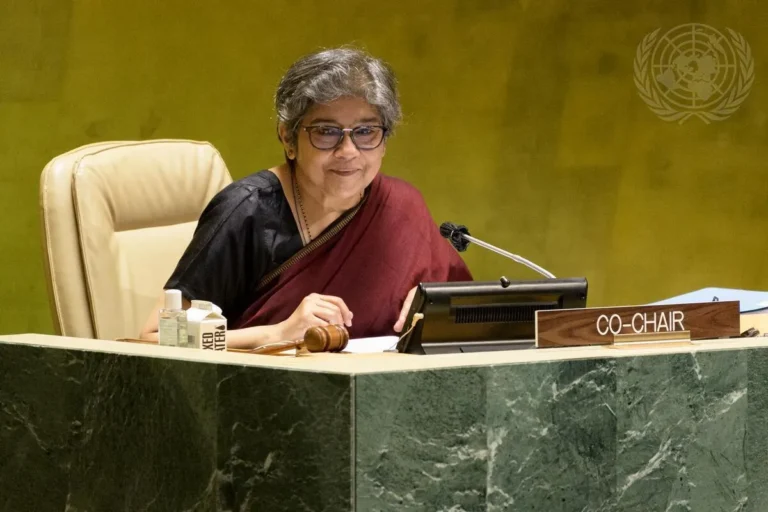
The Permanent Mission of Afghanistan to the United Nations welcomes the appointment by the United Nations Secretary-General of Ms. Rabab Fatima as his Special Representative for Afghanistan and Head of the United Nations Assistance Mission in Afghanistan (UNAMA).
The Mission congratulates Ms. Fatima on her appointment and wishes her every success in carrying out this important responsibility. Her distinguished diplomatic career, extensive multilateral experience, and proven leadership within the United Nations come at a critical moment for Afghanistan and for the United Nations’ engagement with the country.
Ms. Fatima assumes this responsibility at a pivotal moment following the Security Council’s unanimous adoption of resolution 2822 (2026), extending UNAMA’s mandate until 17 June 2027 and requesting a strategic review of the Mission. The strategic review presents an important opportunity to strengthen UNAMA’s effectiveness, sharpen its strategic focus, and ensure that it remains fully responsive to the evolving realities, priorities, and aspirations of the Afghan people.
The Permanent Mission looks forward to working closely with Ms. Fatima in advancing the implementation of UNAMA’s mandate. We are confident that, under her leadership, UNAMA will continue to carry out its responsibilities in a principled, impartial, and effective manner, including by facilitating meaningful political engagement, promoting an inclusive Afghan-owned political process, strengthening regional dialogue and cooperation, supporting humanitarian coordination, protecting civilians, monitoring and reporting on the human rights situation, and advocating for the restoration and protection of the fundamental rights and freedoms of all Afghans, particularly women and girls.
At a time when Afghanistan continues to face profound political, humanitarian, human rights, economic, and security challenges, the United Nations’ engagement remains more important than ever. The Afghan people continue to look to the United Nations as an impartial and trusted partner committed to peace, justice, human rights, and the purposes and principles of the Charter of the United Nations. The courage and resilience of Afghan women and girls, despite unprecedented restrictions on their rights and freedoms, continue to inspire the international community and deserve the United Nations’ unwavering support and advocacy.
The Permanent Mission also reiterates the importance of the timely appointment of the Secretary-General’s Special Envoy on Afghanistan, in accordance with Security Council resolution 2721 (2023). The roles of the Special Representative and the future Special Envoy should be complementary and mutually reinforcing in advancing a coherent and coordinated United Nations approach, facilitating meaningful engagement among all credible Afghan stakeholders, including women, civil society, democratic forces, and other representative voices, and supporting a credible political process leading to a peaceful, representative, inclusive, legitimate, and accountable system of governance that reflects the will and diversity of the Afghan people.
The Mission underscores that all United Nations engagement on Afghanistan should remain principled and conditions-based, consistent with relevant Security Council resolutions, and should support efforts toward an inclusive, representative, legitimate, and accountable political order. Such engagement should not contribute to the normalization of the current Taliban regime in the absence of meaningful and irreversible progress on human rights, particularly the rights of women and girls, inclusive governance, and international obligations.
The Mission is confident that the forthcoming strategic review will further strengthen UNAMA’s capacity to deliver on its mandate and enhance its contribution to promoting peace, stability, human rights, humanitarian assistance, regional cooperation, and the implementation of a comprehensive, Afghan-owned and Afghan-led political process consistent with relevant Security Council resolutions.
The Permanent Mission of Afghanistan reaffirms its full support for a strong, effective, and impartial United Nations presence in Afghanistan and looks forward to working closely with Ms. Fatima, the Secretary-General, the United Nations, Member States, regional partners, and all relevant stakeholders in pursuit of a peaceful, stable, prosperous, representative, inclusive, legitimate, and accountable Afghanistan, founded on the will of its people, respect for human rights and fundamental freedoms, and living in peace with itself, its neighbours, and the wider international community.
Statement of the Permanent Mission of Afghanistan to the United Nations on the Pakistani Airstrikes in Paktika, Paktia, and Kunar Provinces
29 June 2026 – New York
The Permanent Mission of Afghanistan to the United Nations strongly condemns the Pakistani airstrikes carried out overnight on 28–29 June 2026 in the provinces of Paktika, Paktia, and Kunar. According to preliminary figures released by the United Nations Assistance Mission in Afghanistan (UNAMA), at least 28 civilians were killed and 49 others injured, including women and children. We extend our deepest condolences to the families of those who lost their lives and express our sincere wishes for the full and speedy recovery of those injured.
These attacks constitute a serious violation of Afghanistan’s territorial integrity and are inconsistent with international law, including the Charter of the United Nations. No security concern can justify military operations that result in civilian casualties or violate the territorial integrity of another State. The protection of civilians must remain paramount under all circumstances.
The people of Afghanistan have endured decades of war, violence, and instability and continue to bear its devastating consequences. The Taliban regime has already inflicted immense suffering on the Afghan people through its oppressive policies, systematic human rights violations, and failure to fulfill its responsibilities. They must not become victims of military confrontation arising from counterterrorism allegations and tensions involving the Taliban and Pakistan. The continued suffering of Afghan civilians is unacceptable and must not be normalized.
At the same time, the Taliban bear direct responsibility for Afghanistan’s continued transformation into a permissive environment for UN-designated terrorist groups. Their failure to uphold Afghanistan’s international counterterrorism obligations, together with the continued presence and activities of terrorist organizations on Afghan territory—as documented in successive United Nations reports—remains a source of growing national and regional insecurity and has undermined confidence among Afghanistan’s neighbors and the broader international community.
These realities do not constitute a justification for unilateral military action that endangers civilian lives or infringes upon Afghanistan’s territorial integrity. Counterterrorism efforts must be conducted in full accordance with international law, the Charter of the United Nations, and the United Nations Global Counter-Terrorism Strategy.
Sustainable and effective counterterrorism requires genuine political will, consistent implementation without distinction, and a legitimate, representative, and accountable government in Afghanistan that is committed to fulfilling its national and international obligations. Lasting regional security cannot be achieved through military escalation alone, but through responsible governance, meaningful regional cooperation, good-neighborly relations, non-intervention, and full respect for international law.
The Permanent Mission of Afghanistan calls upon the United Nations and the international community to closely follow these developments, reaffirm the principles of the UN Charter, and insist on respect for Afghanistan’s territorial integrity. We further call upon Pakistan to immediately cease all military strikes on Afghan territory and to ensure full accountability for violations of international law. The international community must work urgently to prevent further escalation and ensure the protection of Afghan civilians.
The people of Afghanistan deserve peace, security, respect for their territorial integrity, and the opportunity to live free from terrorism, violence, and fear.
Afghanistan Statement at the UN Security Council Meeting on the Extension of UNAMA's Mandate
Delivered by H.E. Mr. Naseer Ahmad Faiq, Chargé d’Affaires of Afghanistan Mission to the United Nations
15 June 2026 – New York
Madam President,
It is always great to see women leaders in decision-making and leading at the UN. We thank the members of the Security Council for the unanimous adoption of this resolution extending the mandate of the United Nations Assistance Mission in Afghanistan (UNAMA) for another year. We also express our appreciation to the Peoples Republic of China, as penholder, for its leadership and efforts in facilitating consensus on this important resolution.
At a time when Afghanistan continues to face a multidimensional political, humanitarian, economic, and human rights crisis, the continued presence of the United Nations remains indispensable. UNAMA plays a vital role in promoting peace and stability, facilitating political dialogue, coordinating humanitarian assistance, monitoring and reporting human rights, and maintaining international attention on the plight of the people of Afghanistan. The adoption of this resolution comes as the human rights situation in Afghanistan continues to deteriorate.
Just days ago, on 6 and 7 June, the Taliban’s so-called morality police arbitrarily detained dozens of women and girls in Herat because of their appearance and dress. When residents peacefully protested these arrests, Taliban forces responded with live fire, resulting in civilian casualties, including the death of a woman and a child. Following that, the Taliban have stepped up the interrogation, detention, and imprisonment of social activists and social media users across the province. UNAMA described the arrests as arbitrary, while the UN Special Rapporteur on Afghanistan expressed alarm over the reported use of force against peaceful protesters.
These events are not isolated incidents. They reflect a broader pattern of systematic discrimination, repression, and exclusion that has, for nearly five years, sought to erase women and girls from public life and deny them access to education, employment, freedom of movement, and meaningful participation in society. The Taliban leader’s recently issued ban on smartphones across government institutions, alongside broader controls on information and communication, is aimed at suppressing dissent, concealing abuses, and isolating the Afghan people further.
We therefore welcome the Council’s strong emphasis on the protection and promotion of human rights, particularly the rights of women and girls and the reference to UNSC resolution 1325, and its call for the reversal of policies and practices that are inconsistent with Afghanistan’s international human rights obligations as well as to Islamic values and Afghanistan’s traditions.
We also welcome the resolution’s emphasis on inclusive, representative, participatory, and responsive governance. Sustainable peace and stability cannot be achieved through exclusion. A durable political solution requires the meaningful participation of all Afghans — women and men, diverse ethnic and religious communities, youth, civil society, political actors, and persons with disabilities.
In this regard, we encourage UNAMA to continue implementing its mandate fully and impartially, with particular attention to facilitating political dialogue and engagement with all credible Afghan stakeholders, both inside and outside the country.
We also underscore the importance of implementing Security Council Resolution 2721 and advancing a credible, inclusive, Afghan-owned political process that leads to a legitimate, representative, and accountable political order. In this context, the timely appointment of a highly qualified Special Representative of the Secretary-General will be essential. We also welcome the resolution’s request for a strategic review of UNAMA and look forward to recommendations that further strengthen the Mission’s effectiveness and coherence.
We further welcome the resolution’s support for humanitarian assistance, socioeconomic development, regional cooperation, and dialogue between all Afghan stakeholders and the international community. While these efforts remain essential, they should continue to be pursued alongside UNAMA’s political and human rights responsibilities. Afghanistan also continues to face serious security challenges. The continued presence of terrorist groups on Afghan soil remains a matter of concern for Afghanistan and for regional and international peace and security. We therefore welcome the continued attention given to counterterrorism efforts and cooperation with the Security Council’s Monitoring Team.
Madam President,
As UNAMA enters another year of its mandate, we encourage the Mission to continue its vital work with impartiality, professionalism, and determination. We particularly value its role in monitoring and reporting on human rights, supporting humanitarian operations, facilitating inclusive political dialogue, and advancing international efforts aimed at peace, stability, and the well-being of the people of Afghanistan.
The people of Afghanistan continue to look to the United Nations as a trusted partner and a source of hope during one of the most difficult periods in our contemporary history. We urge the international community to remain united and principled in its engagement with Afghanistan. Efforts to address the country’s challenges must remain firmly anchored in respect for human rights, the meaningful participation of women, the fight against terrorism, and the pursuit of an inclusive, representative, and legitimate political future. The Council’s unity in support of a strong UNAMA mandate sends an important message. The people of Afghanistan deserve protection, dignity, accountability, and a future defined by rights, opportunity, and hope rather than fear and repression.
In closing, we express our appreciation to the members of the Security Council, the Secretary-General, UNAMA leadership, and all United Nations personnel serving under extremely difficult circumstances. Their work remains essential, and their safety, freedom of movement, and unhindered access throughout Afghanistan, including for Afghan women staff, must be fully respected. Thank you.
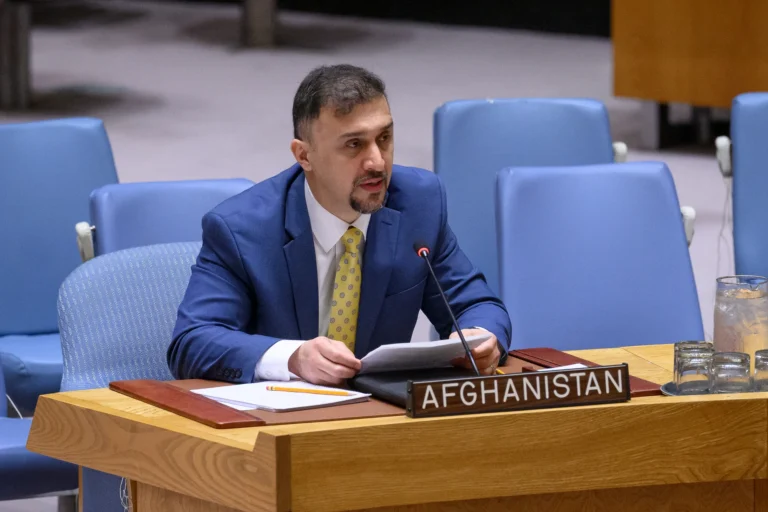
Statement by H.E. Mr. Naseer Faiq at the UN Security Council meeting on the Situation in Afghanistan
8 June 2026 – New York
Madam President,
At the outset, allow me to congratulate Colombia on assuming the Presidency of the Security Council and to wish you and your team every success this month.
We thank Ms. Georgette Gagnon, Deputy Special Representative of the Secretary-General, and Ms. Edem, Wosomu, Director of Crisis Response Division for Humanitarian Affairs, for their sobering briefings, and Ms. Metra Mehran, Founder of Afghanistan Justice Archive, for bringing the voices of Afghan women into this Chamber. We also thank the Council members and previous speakers for their continued solidarity and support for the Afghan people.
Madam President,
Today, I want to share the perspective of ordinary people of Afghanistan - the deep concerns, frustrations, and aspirations they convey to us every day from inside the country.
Nearly five years after the Taliban’s military takeover, Afghanistan remains trapped in a deep political, economic, social, and human rights crisis. The facts are clear and well-documented. The real question before this Council is whether this situation is sustainable, and whether the international community is prepared to move beyond managing the consequences of the crisis toward addressing the root causes in the interest of the Afghan people and the international community.
Allow me to highlight five realities that cannot be ignored, and five suggestions or imperatives that should guide our collective response.
First: Afghanistan faces a profound human and social crisis.
Twenty-two million Afghans – two-thirds of the population – remain dependent on urgent humanitarian assistance. Poverty and unemployment are widespread, economic opportunities are shrinking, and an entire generation of young Afghans and women no longer see a future for themselves in their own country. The loss of human capital, deepening poverty, rising forced and early marriages, pscychological distress, and growing criminality are clear signs of a society breaking under the weight of exclusion and injustice.
The Imperative:
Afghanistan needs a national vision focused on job creation, standard and modern education, and human development. The country cannot move forward while excluding large segments of its population from contributing to its future. And most importantly, this vision requires a political horizon that leads to broad-based, legitimate and representative government that provides the foundation for long-term stability.
Second: and that in that context, The Taliban governance has failed the people of Afghanistan.
A model of governance designed by the Taliban and exclusively for the Taliban, has no accountability to the people it claims to govern. Corruption, the abuse of power, and the concentration of wealth within a narrow circle are well-documented. Meanwhile, Afghanistan’s mineral wealth is extracted without transparency or public oversight. The Taliban have consistently ignored both the demands of the people of Afghanistan and the repeated appeals of the international community.
The Imperative:
Afghanistan needs a legitimate, accountable, and law-based system of governance that derives its authority from the consent of its people and uses national resources for the benefit of all citizens.
Third: Systematic exclusion and discrimination have pushed Afghanistan further into isolation.
This year marks the five consecutive years in which Afghan girls have been denied access to secondary and higher education. Women have been removed from public life, civil society spaces have been restricted, and independent media has been subjected to censorship. The Taliban have further codified this discrimination through laws that restrict accountability for domestic violence and permit child marriage under the guise of “silent consent.”
These are not temporary measures; these are deliberate and systematic efforts to exclude half of society from public life – an approach that has absolutly no basis in the true principles of Islam or in Afghanistan’s own history and traditions. We remain deeply concerned by continued and verified reports of arbitrary detention, torture, sexual violence, forced marriages, targeted reprisals, and other serious human rights violations, particularly against women and girls, human rights defenders, former security forces, and media personnel.
The Imperative:
Besides the UN, EU, and regional organizations, Islamic countries and the Organization of Islamic Cooperation (OIC) must play a more active role in making clear to the Taliban that these draconian policies not only pose a threat to the future of Afghanistan but also harm the image of Islam worldwide. The re-opening of schools and universities to girls must remain a non-negotiable priority for the international community as a whole. Additionally, monitoring, reporting and ccountability mechanisms should be strengthened and used effectively to end the impunity.
Fourth: Normalizing the current situation serves neither the people of Afghanistan nor international peace and security.
Engagement without tangible results and concessions without behavioral change have not improved governance, human rights, or political inclusion. Normalizing systematic exclusion and political repression will not bring stability. Mixed messages and contradictory approaches have only prolonged the current impasse and emboldened the Taliban.
The Imperative:
The Security Council needs a stronger, more unified and coherent approach. The message must be clear and consistent: there is no path toward legitimacy or Afghanistan’s reintegration into the international community without full respect for human rights, women’s rights, inclusive governance, and international obligations.
Fifth: The rise of insecurity and the risk of Afghanistan again becoming a platform for extremism and terrorism.
The absence of war should not be mistaken for the presence of genuine peace. True peace exists when girls and boys have equal access to quality education, when women can participate fully and meaningfully in society, and when all citizens enjoy their fundamental rights and freedoms without intimidation and prejudice and not forced to armed resistance. The targeted killings of members of the Shia and Hazara communities in public places, including the Injil district of Herat Province, alongside the unexplained deaths of civilians, hostage taking, and a female UN staff member, do not reflect genuine peace and security in Afghanistan.
Furthermore, the continued expansion of jihadi madrassas and the persistent presence of international terrorist groups, as confirmed by successive UN reports, raise serious concerns for the people of Afghanistan, the region, and the international community. The Taliban’s policies and continued links with terrorist groups have endangered the people of Afghanistan in the past and continue to do so today. But this also presents a threat to regional and international peace and security. And we hope this issue receives the attention it warrants by this Council.
The recent escalation of hostilities between Pakistan and the Taliban has added a dangerous new dimension to this crisis and resulted in significant civilian casualties. Particularly alarming was the reported strike on the Omid Drug Rehabilitation Hospital in Kabul, a civilian medical facility, where UNAMA verified at least 269 people killed and 122 injured. We strongly condemn all attacks that result in civilian harm, the destruction of critical infrastructure, and violations of Afghanistan’s territorial integrity. We ask this Council to condemn and prevent such attacks. No security concern, however legitimate, can justify actions that place civilians at risk or undermine the principles of the United Nations Charter and international humanitarian law.
Afghanistan has long been a victim of terrorism, and its people have suffered immensely from its devastating consequences. We therefore also strongly condemn all terrorist attacks in Pakistan and elsewhere and reaffirm the need for collective efforts to combat terrorism in all its forms and manifestations everywhere.
The Imperative:
The international community and regional countries must adopt a comprehensive, coordinated, and principled strategy to address terrorism, violent extremism, and narcotics trafficking. Such threats can only be addressed sustainably through the establishment of a legitimate, inclusive, representative, and accountable government that is committed to upholding its national and international obligations and ensuring that Afghanistan never again becomes a source of instability and insecurity for its people, the region, or the wider world.
Madam President,
All of these realities point to one unavoidable conclusion: at its core, Afghanistan’s crisis remains a complex political crisis. Humanitarian and economic assistance remain essential to alleviating suffering, but they cannot substitute for a durable and sustainable political solution. Without a credible political process, we risk pushing Afghanistan towards a civil war. We continue to support the central role of the United Nations, the implementation of Security Council Resolution 2721, and efforts to advance a credible, inclusive, and Afghan-owned political process that leads to a legitimate, representative, and accountable political order.
In this regard, the role of UNAMA remains crucial in facilitating such a process in accordance to its mandate and ensuring the meaningful participation of all credible and relevant stakeholders. As negotiations on the renewal of UNAMA’s mandate continue, we reiterate our support for preserving a strong, balanced, and effective mandate. We also emphasize the importance of the timely appointment of a highly qualified Special Representative of the Secretary-General who possesses deep knowledge of Afghanistan, is firmly committed to impartiality, human rights, and conflict resolution, and is capable of advancing a comprehensive political process aimed at achieving lasting peace and stability in Afghanistan.
Madam President,
In conclusion, we call on the Security Council to maintain a strong, unified, and consistent position: there is no path to legitimacy, stability, or reintegration without respect for human rights, inclusive governance, and international law. Engagement with the Taliban should be principled and conditioned on measurable and verifiable progress. All stakeholders and especially Islamic countries and the OIC have a unique responsibility to make that message heard in Kabul. Accountability mechanisms should be used to end impunity. And effective action against terrorism and extremism ultimately requires a government in Afghanistan that is legitimate and accountable to its people and to the world.
The people of Afghanistan are not the cause of this crisis; they are its victims. They want a country where girls can go to school, where young people can look to the future with hope, where women can work and live freely, and where government derives its legitimacy from the will of its people. Helping them achieve that future should remain our shared responsibility. Thank you.
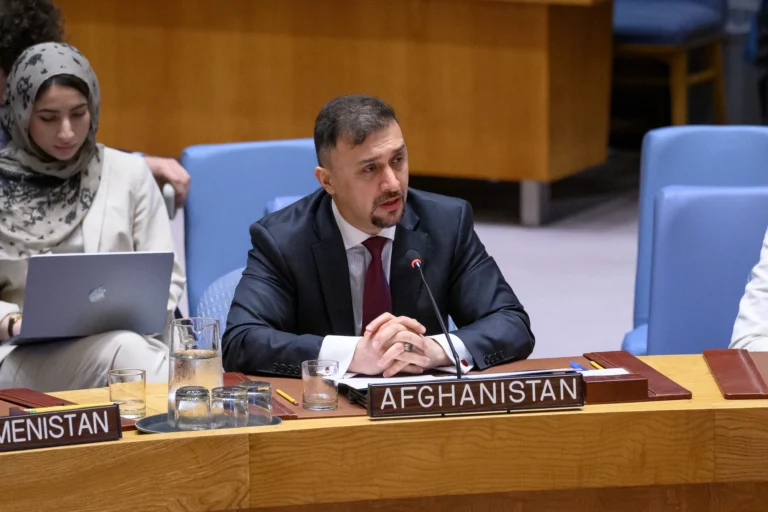
Statement on International Women's Day
8 March 2026 – New York
On this International Women’s Day, we stand in solemn solidarity with the women and girls of Afghanistan, whose fundamental rights to education, to work, to freedom of movement, and to public life, have been systematically stripped away.
Since August 2021, the Taliban regime has imposed what amounts to gender apartheid: banning girls from secondary and higher education, excluding women from most forms of employment, and silencing their voices in every sphere of public life. These acts are neither Islamic nor cultural, they are grave violations of international human rights law and stand in stark contrast with Islamic values.
UN Member States and leadership have repeatedly reaffirmed that the rights of Afghan women are non-negotiable. They have called for the immediate and unconditional reversal of all discriminatory decrees, and for those responsible to be held accountable. A society that erases half its population cannot build lasting peace or prosperity.
The women of Afghanistan have not been silenced. They resist, they persist, and they deserve the world’s unwavering support, not only today, but every day.
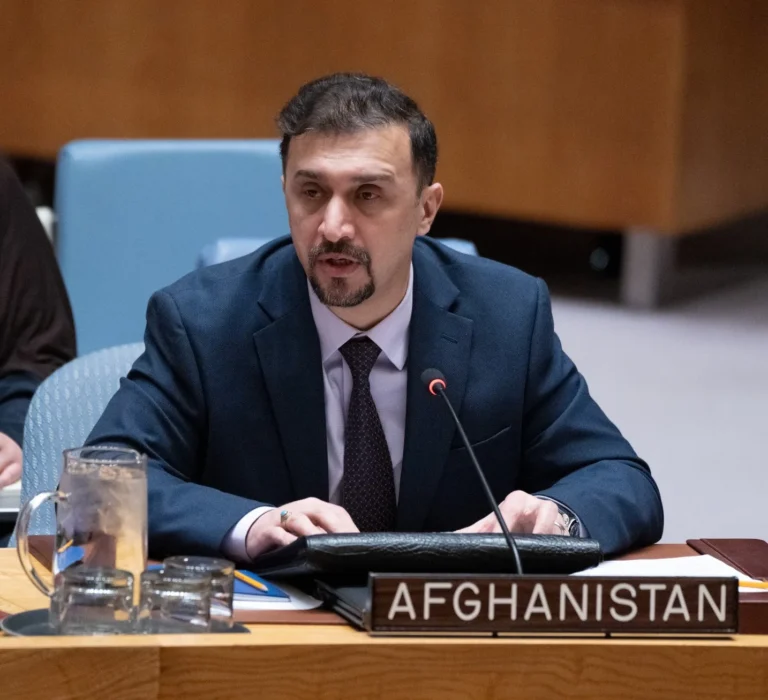
Statement at the Security Council Meeting on the Situation in Afghanistan
9 March 2026 – New York
Mr. President,
Let me begin by congratulating you on assuming the Presidency of the Council and for your leadership during the month of March. I also thank you for convening this important meeting on the situation in Afghanistan. We also appreciate the strong joint press stakeout statement issued prior to this meeting. I’m grateful to Ms. Georgette Gagnon, Deputy Special Representative of the Secretary-General and Officer-in-Charge of UNAMA, for her detailed briefing. I thank the previous speakers for reaffirming their support for the people of Afghanistan, particularly women and girls.
Madam President,
Yesterday marked International Women’s Day, an important moment to reflect on the challenges faced by millions of women around the world. I wish to pay tribute to the courage and determination of all women, especially the women of Afghanistan, who are engaged in a historic struggle for freedom, justice and lasting peace. The most meaningful way to honor their commitment and sacrifice is to support their efforts to reclaim their rightful place in society and in the international community…Read more.
Statement at the 70th session of the UN Commission on the Status of Women (CSW70)
16 March 2026 – New York
Madam Chair,
Excellencies, Distinguished Delegates,
We wish to draw the attention of this Commission to an issue that lies at the very heart of its mandate: confronting systems of discrimination that deny women and girls access to justice, protection, and equal participation in public life.
For Afghanistan, the priority theme of this session is not theoretical. Today, Afghan women and girls are living under one of the most severe systems of institutionalized gender discrimination in the world. What we are witnessing is not merely restricted access to rights. It is the systematic dismantling of those rights.
As documented by the Special Rapporteur on the situation of human rights in Afghanistan, women and girls are subjected to an institutionalized system of genderbased discrimination, oppression, and domination that may amount to crimes against humanity. Institutions that should safeguard justice have instead been transformed into instruments of repression.
Madam Chair,
Access to justice cannot exist where the legal system itself is weaponized. Since 2021, constitutional protections have been suspended, the legal framework dismantled, and the Law on the Elimination of Violence Against Women abolished.
Women judges and prosecutors have been removed from the justice system, and statutory law has increasingly been replaced by decrees rooted in ideological control. Recent legal developments, including newly introduced penal and criminal procedure codes, further institutionalize discriminatory hierarchies and weaken due process guarantees, undermining equality before the law.
Women who attempt to seek justice frequently face dismissal of complaints, forced mediation, intimidation, and retaliation. Shelters for survivors of gender-based violence have been closed, and credible reports continue to document torture and illtreatment of women detainees. In such conditions, the denial of justice is not incidental, it is systemic.
Madam Chair,
The erosion of justice cannot be separated from the broader erosion of women’s rights. The ban on education beyond grade six has deprived more than 2.2 million girls of their right to learn. Restrictions on employment, mobility, and public participation have rendered women economically marginalized and socially isolated.
The Special Rapporteur’s recent report on women’s right to health further demonstrates how these restrictions undermine access to life-saving healthcare, including maternal and reproductive services, with profound consequences for women’s physical and mental wellbeing. When a woman cannot travel without a mahram, cannot consult a lawyer, cannot safely report violence, and cannot seek healthcare without fear, justice is structurally denied.
Madam Chair,
The international community must also confront the legal characterization of what is occurring. The Working Group on discrimination against women and girls has called upon States to consider recognizing gender apartheid within the framework of crimes against humanity. The Special Rapporteur has likewise characterized Taliban policies as gender persecution and supported the recognition of gender apartheid as an international crime. Naming this system is not rhetorical, it is essential for accountability.
Madam Chair,
Encouragingly, important accountability pathways are beginning to emerge. The establishment of an independent investigative mechanism for Afghanistan represents an important step toward preserving evidence and supporting future criminal proceedings. This mechanism complements ongoing work by the International Criminal Court and other accountability processes and must be fully resourced and operationalized.
Afghan women, legal experts, and civil society actors are also documenting decrees, judicial decisions, and survivor testimonies to meet international evidentiary standards. Their work is vital to ensuring that these violations are neither forgotten nor normalized.
Madam Chair,
A victim-centered and survivor-informed approach must remain at the core of this Commission’s work. Afghan women consistently remind us that justice is not limited to courtroom proceedings. Justice also means safety, dignity, recognition of harm, economic autonomy, access to healthcare, and meaningful participation in shaping their country’s future.
The review theme of this session, women’s full and effective participation in public life and the elimination of violence, cannot be realized while women are excluded from governance, silenced in public discourse, and punished for non-compliance with discriminatory edicts.
Madam Chair,
We therefore call on Member States to:
- Reject the normalization of systemic gender persecution;
- Support efforts to recognize gender apartheid within international law;
- Strengthen and adequately resource accountability mechanisms, including the independent investigative mechanism;
- Sustain support for Afghan women human rights defenders, legal professionals, and civil society actors.
Ultimately, access to justice in Afghanistan will only be possible through a legitimate, responsible, and inclusive system of governance grounded in the rule of law and reflecting the will of the Afghan people. Justice delayed risks becoming injustice normalized.
We remain committed to working with Member States, UN mechanisms, and Afghan women in all their diversity to advance an approach that restores legality, equality, and dignity.
Thank you, Madam Chair.